What Wild Places Teach Us About Being Present

There's a particular kind of quiet that only exists in wild places. It isn't silence, far from it. It's the rhythmic hush of waves folding onto sand, the whisper of wind moving through scrub and grass, the distant cry of seabirds tracing invisible lines across the sky. It's a quiet that seems to make space for something deeper to emerge. And when you're standing there with your child, watching them step forward into that vastness, it becomes something else entirely: a shared moment that feels both fleeting and foundational.
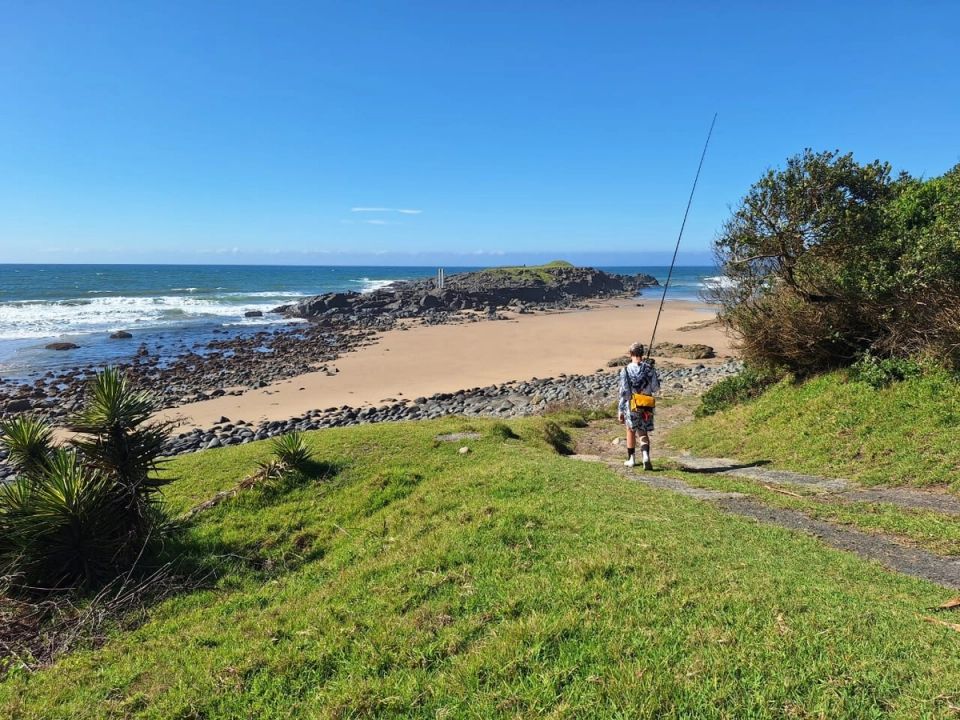
Looking at a scene like this, an open stretch of coastline, a winding path cutting through green toward the sea, a child with a fishing rod much taller than himself, you're reminded how little is actually required to create meaning. No screens, no structured activities, no noise. Just time. Just presence. Just the willingness to follow curiosity wherever it leads.
Parenting often feels like a race against the clock. Schedules, school runs, work demands, obligations layered one on top of the other until the days blur together. In that rush, it's easy to default to convenience, to entertain rather than engage, to fill time rather than experience it.
"Nature has a way of interrupting that pattern. It slows everything down, whether you intend it to or not."
When you take your child into a place like this, something shifts. The urgency dissolves. There's no "next thing" to get to. The destination becomes irrelevant because the experience is already happening.
Someone Becoming
A child walking toward the ocean with a fishing rod isn't just going fishing. He's stepping into a world that is larger than himself, testing his independence in small, meaningful ways. Each step down that path is an act of exploration. The uneven ground, the changing textures beneath his feet, the sound of waves growing louder, all of it is information, discovery, learning without instruction.
"You begin to see your child not just as someone to guide, but as someone becoming."
And for a parent, there's a quiet recalibration that happens in these moments. You begin to see your child not just as someone to guide, but as someone becoming. You notice the way they pause to look at something you might have missed. The way they move with a mixture of confidence and caution. The way they carry their small responsibilities, like that fishing rod, with a seriousness that feels both endearing and profound.
Out here, the usual markers of progress don't apply. There are no grades, no milestones being measured, no external validation. Yet something important is taking place. Confidence is being built, not through praise, but through experience. Curiosity is being nurtured, not through instruction, but through freedom. Connection is deepening, not through conversation alone, but through shared presence.
What the Ocean Doesn't Care About
There's also something deeply humbling about nature, for both parent and child. The ocean doesn't care about your plans. The tide comes in and goes out on its own terms. The wind shifts without warning. The rocks remain unmoved by your presence.
"In that environment, you're reminded that control is an illusion, and adaptability becomes the real skill."
For children, this is an invaluable lesson. They learn patience when the fish don't bite. They learn resilience when the wind makes casting difficult. They learn observation, watching the water, reading the environment, noticing patterns. These aren't lessons that can be easily taught in a classroom, yet they shape the way a person engages with the world.
And then there's the simplicity of it all. A rod, a line, the sea. No elaborate setup, no complicated rules. Just an activity that has connected generations across time.
"When you share something like that with your child, you're not just passing on a skill. You're passing on a way of being."
They'll Remember That You Were There
It's easy to underestimate the impact of these experiences because they often feel ordinary while they're happening. A walk to the beach. A morning spent fishing. A few hours outdoors. But memory doesn't work in terms of grand gestures. It holds onto feelings, atmospheres, fragments. Years from now, your child might not remember every detail of the day, but they will remember the feeling of standing there. The openness. The sense of adventure. The quiet companionship.
They'll remember that you were there.
And perhaps that's the most important part. Not what you did, but that you did it together. That you stepped away from the noise of everyday life and entered a space where time felt different. Where attention wasn't divided. Where presence wasn't partial.
In a world that constantly pulls us toward distraction, choosing to be fully present with your child is a radical act. It requires intention. It requires letting go of the need to optimise every moment. It requires trusting that simply being together, in a meaningful environment, is enough.
Wild places offer the perfect setting for that kind of presence. They strip things back to what matters. They remind us that connection doesn't need to be engineered. It can emerge naturally when given the space.
So you walk the path. You watch your child move ahead of you, occasionally glancing back. You follow, not to lead, but to accompany. The ocean waits at the end, vast and unchanged, yet somehow new each time you arrive.
And in that shared journey, between where you started and where you're going, something quietly significant takes place. Not dramatic, not obvious, but lasting.
A bond is strengthened. A memory is formed. A small piece of who your child will become is shaped.
All from a simple walk toward the sea.


